Understanding the Gut-Brain Connection and Its Impact on Health
Have you ever made a decision and felt it in your stomach before your brain had finished processing it?

Or sat down to eat when you were anxious and found that the meal you were looking forward to suddenly held no appeal at all — that your appetite had simply left the building without consulting you? Or noticed that a few days of eating badly left you feeling not just physically sluggish but mentally foggy, irritable, and vaguely low in a way that did not obviously trace back to anything that had happened in your life?
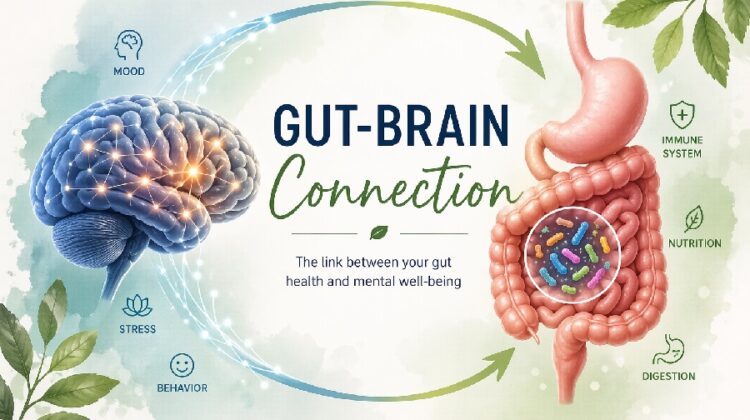
These are not coincidences. They are your gut and your brain talking to each other — a conversation that is happening continuously, bidirectionally, and at a level of complexity that science is only beginning to fully appreciate.
The relationship between the digestive system and the brain was, until relatively recently, understood in one direction only. The brain controlled the gut — sending signals that regulated digestion, appetite, and gut movement. That the gut might be sending equally significant signals back, shaping mood, cognition, mental health, and behaviour, was not a mainstream scientific position as recently as thirty years ago.
Today it is one of the fastest-moving areas in neuroscience and gastroenterology, and what researchers are finding is remarkable enough to change how we think about everything from depression to autoimmune disease to the relationship between what we eat and how we feel — not just physically, but mentally and emotionally.
The Second Brain — Why Your Gut Is More Than a Digestive Tube
The first thing to understand about the gut-brain connection is that the gut is not simply a passive system that receives instructions from the brain and executes them. It has its own nervous system — a dense network of approximately five hundred million neurons embedded in the walls of the gastrointestinal tract, extending from the oesophagus to the rectum.
This system — called the enteric nervous system — is so complex and so functionally autonomous that neuroscientists often refer to it as the second brain. And unlike the second-brain metaphors applied to various organs for rhetorical effect, this one is scientifically precise. The enteric nervous system can regulate digestion, control gut movement, respond to environmental stimuli, and coordinate the incredibly complex process of nutrient absorption — all independently, without instruction from the brain or spinal cord. If you severed the connection between the enteric nervous system and the central nervous system, your gut would continue to function.
The primary physical highway between these two brain systems is the vagus nerve — one of the longest and most complex nerves in the body, running from the brainstem through the chest and into the abdomen, with connections to virtually every major organ along the way. The vagus nerve carries signals in both directions. Brain to gut. Gut to brain. And here is the detail that most people find surprising: approximately eighty percent of the fibres in the vagus nerve carry information upward — from the gut to the brain — rather than downward. The gut is talking to the brain considerably more than the brain is talking to the gut.
Understanding this architecture makes the downstream findings about gut-brain communication considerably less mysterious. The gut is not a passive recipient of neural instruction. It is an active participant in the body’s information ecosystem, with its own substantial voice in the ongoing conversation about how you feel, how you think, and how you behave.
The Gut Microbiome — The Invisible Community That Shapes Your Mental Health
If the two-brain model is the architectural surprise in the gut-brain story, the microbiome is the biological one.
Your gut is home to approximately thirty-eight trillion microorganisms — bacteria, viruses, fungi, and other microscopic life forms — whose collective genetic material contains roughly three hundred times more genes than the human genome. This community, unique to each person as a fingerprint, is not a passive passenger in your digestive system. It is an active participant in processes that extend well beyond digestion.
Among the most striking findings of the past decade of microbiome research is the extent to which these microorganisms participate in the production of neurochemicals — the chemical messengers that your brain uses to regulate mood, motivation, anxiety, and a range of other mental states.
Approximately ninety percent of the body’s serotonin — the neurotransmitter most associated with feelings of wellbeing and emotional stability, and the target of a majority of antidepressant medications — is produced not in the brain but in the gut, largely under the influence of gut bacteria. Specific bacterial strains also contribute to the production of dopamine, the neurotransmitter associated with motivation and reward. GABA, the brain’s primary inhibitory neurotransmitter — the one that puts the brakes on anxiety and reduces neural overactivation — has gut-based production pathways that researchers are still mapping.
This does not mean that depression is simply a gut problem or that anxiety could be resolved by changing your diet. The neuroscience of mental health is considerably more complex than that, and the research in this area is still developing. But it does mean that the gut’s contribution to neurochemical balance is significant enough that separating mental health from gut health — treating them as entirely distinct systems with no meaningful connection — is increasingly scientifically untenable.
The implications are already influencing clinical thinking. Psychiatrists and gastroenterologists who once worked in completely separate clinical silos are beginning to exchange notes. Conditions like irritable bowel syndrome — long understood to involve psychological components but primarily managed as a gastrointestinal condition — are being reconceptualised through the bidirectional lens of gut-brain interaction. And the emerging field of psychobiotics — bacterial strains specifically studied for their effects on mental health outcomes — is generating genuinely interesting early findings, though the clinical applications remain in earlier stages of development.
The Immune System — The Third Player Nobody Talks About Enough
There is a third actor in the gut-brain story that receives less popular attention than the microbiome but whose role may be equally significant. The gut is home to approximately seventy percent of the body’s immune system — the majority of the immune cells, lymph tissue, and immunological infrastructure that constitutes your body’s defence network.
This concentration makes biological sense. The gut is the point of entry for everything you ingest — food, bacteria, viruses, toxins, medications, everything. It is the interface between the external world and the internal body, and it needs substantial immunological capacity to distinguish between what is safe and what is threatening, what to absorb and what to reject.
When the gut’s immune function is well-regulated, the immune response is appropriately calibrated — vigorous enough to protect against genuine threats, restrained enough not to attack the beneficial bacteria and food proteins that belong there. When gut health is compromised — through poor diet, chronic stress, infection, or other factors — immune dysregulation follows. The gut’s barrier function, which normally prevents harmful substances from crossing into the bloodstream, can become leaky. Inflammatory signalling increases. And that inflammation does not stay confined to the gut.
Chronic low-grade inflammation originating in a dysfunctional gut has been implicated by researchers in a growing range of conditions, including cardiovascular disease, type 2 diabetes, and — most relevant to the gut-brain connection — neurological and psychiatric conditions. Studies have found elevated inflammatory markers in people with depression, anxiety, and bipolar disorder. Research on neurodegeneration has identified gut dysbiosis — imbalance in the gut microbiome — as a factor appearing years before the onset of clinical symptoms in both Alzheimer’s and Parkinson’s diseases.
The directionality of these relationships is still being established. Researchers are working to determine what is cause and what is consequence — whether gut dysfunction drives the neurological changes, whether neurological changes drive the gut dysfunction, or whether both are products of some upstream factor affecting both systems simultaneously. The honest answer in 2026 is that the picture is complex and still developing. But the complexity does not reduce the significance. It increases the urgency of understanding it.
Stress and the Gut — The Two-Way Damage
Most people have experienced the gut consequences of acute stress — the stomach that knots before a difficult conversation, the digestive upset that accompanies significant anxiety, the appetite that disappears entirely when emotional pain is severe enough. These are well-known phenomena that most people process as simply part of how stress feels.
What is less commonly understood is the mechanism behind these experiences and — more importantly — the long-term consequences of chronic stress on gut health.
When the brain perceives threat, it triggers the sympathetic nervous system — the fight-or-flight response — releasing cortisol, adrenaline, and related stress hormones into the bloodstream. These hormones reach the gut, where they produce a cascade of effects. Blood flow to the digestive system is reduced, as the body redirects resources toward the muscles and organs more immediately involved in the stress response. Gut motility changes — for some people it accelerates, producing diarrhoea; for others it slows, producing constipation. The production of digestive enzymes decreases. The permeability of the gut barrier increases.
In the short term, these effects are adaptive — the body prioritising immediate survival over the lower-priority task of digesting lunch. In the chronic stress context that characterises many modern lives — sustained pressure at work, ongoing financial anxiety, relationship difficulty, the ambient overstimulation of a digitally connected existence — these effects become sustained rather than temporary. And sustained disruption of gut function produces sustained changes in the gut microbiome, which produce their own effects on neurochemical balance, immune function, and the signals being sent back up to the brain.
The loop is self-reinforcing and worth understanding clearly. Stress disrupts the gut. Gut disruption changes the microbiome. Microbiome changes affect neurotransmitter production and the immune response. Altered neurochemistry and increased inflammation affect mood and cognition. Impaired mood and cognition reduce the capacity to manage stress effectively. The stress continues and the loop deepens.
Chronic gastrointestinal conditions — irritable bowel syndrome, inflammatory bowel disease, gastroesophageal reflux disease — are now understood by most researchers to involve this bidirectional stress-gut loop as a significant component of their pathology, even when the conditions were historically treated as purely physical. This does not mean they are “just stress” — they have real, measurable physiological components. It means their treatment needs to address the full system rather than the gut alone.
The Hormonal Dimension — Hunger, Fullness, and More
The gut is also one of the body’s major endocrine organs — producing hormones that influence appetite, energy regulation, metabolism, and aspects of brain function that go well beyond hunger and satiety.
Ghrelin, produced primarily in the stomach, is the hormone most associated with hunger signalling — rising before meals and signalling to the brain that food intake is needed. But ghrelin’s role extends beyond meal timing. Research has found that ghrelin levels are affected by sleep deprivation and by chronic stress, both of which elevate ghrelin and produce increased appetite and cravings for calorie-dense foods — one of the mechanisms through which poor sleep and chronic stress contribute to weight gain.
Leptin, produced in fat tissue and regulated by gut signals, communicates with the brain’s hypothalamus to regulate energy balance — telling the brain how much stored energy is available and modulating appetite accordingly. Leptin resistance — a state in which the brain stops responding appropriately to leptin’s signals — is a major contributor to obesity and is associated with a range of dietary and lifestyle factors that compromise gut health.
The incretin hormones — GLP-1 and GIP, produced in the gut in response to food intake — are involved in regulating insulin secretion and have attracted extraordinary research and commercial attention due to their role in the development of GLP-1 receptor agonists, the medications that have transformed the treatment of type 2 diabetes and obesity over the past few years.
The broader point is that the gut is not simply processing food. It is orchestrating a hormonal conversation with the brain and the rest of the body that shapes appetite, metabolism, energy, and numerous aspects of how the brain functions.
What You Can Actually Do — Practical Guidance That Goes Beyond Generic Advice
Diet — The Foundation With the Most Evidence Behind It
The research on diet and gut microbiome health is substantial enough to support several confident, specific conclusions.
Dietary fibre — found in vegetables, fruits, legumes, and whole grains — is the primary food source for beneficial gut bacteria. The dramatic reduction in dietary fibre in modern Western diets compared to the diets of our ancestors and contemporary populations eating traditional foods is consistently correlated with reduced microbiome diversity and the health problems associated with it. Simply increasing the variety and quantity of plant foods in your diet is the single most evidence-backed intervention for improving gut microbiome health.
Fermented foods — yoghurt with live cultures, kefir, kimchi, sauerkraut, miso, tempeh, kombucha — introduce beneficial bacterial strains directly into the gut ecosystem. A study published in Cell in 2021 found that a diet high in fermented foods increased microbiome diversity and reduced inflammatory markers more effectively than a high-fibre diet over the study period — a finding that generated significant interest and has been broadly replicated.
Ultra-processed foods — the industrially manufactured, heavily additive-laden products that constitute a growing proportion of calories in most developed countries — are consistently associated with reduced microbiome diversity, increased gut permeability, and elevated inflammatory markers. Reducing their proportion in your diet, rather than eliminating them entirely, is both more realistic and more consistent with what the research actually supports.
Exercise — The Gut Health Benefit Nobody Mentions
The well-documented benefits of exercise for cardiovascular health, mental health, metabolic health, and longevity have a gut health dimension that is considerably less discussed.
Regular physical activity has been shown to increase gut microbiome diversity — independently of dietary changes. Exercise promotes the growth of short-chain fatty acid-producing bacteria, whose products nourish the gut lining, reduce inflammation, and communicate regulatory signals to the immune system and brain. It reduces gut transit time, reducing the exposure of the gut lining to potentially harmful substances. And it reduces chronic cortisol levels, which as described above is directly protective of gut barrier function and microbiome balance.
The type of exercise matters somewhat, but the most consistent finding across the research is that regular moderate exercise produces significant gut health benefits regardless of modality. Walking, cycling, swimming, yoga — all of it counts in the ways that matter for gut health.
Stress Management — The Gut-Brain Reason It Is Non-Negotiable
Given the direct pathway from chronic stress to gut disruption to microbiome imbalance to impaired mental health — and the reverse pathway from poor gut health to impaired stress regulation — stress management is not optional enrichment from a gut-brain health perspective. It is a medical necessity.
The interventions with the strongest evidence base for reducing the physiological effects of chronic stress — and specifically for improving gut-brain axis function — include mindfulness meditation, which has documented effects on cortisol regulation and gut permeability; vagal nerve stimulation through practices like slow, deep breathing and cold water exposure, which activates the parasympathetic nervous system and directly counteracts the sympathetic activation that disrupts gut function; and regular physical activity, which serves the dual function of improving gut health directly while reducing the chronic stress load.
Cognitive approaches — therapy, particularly cognitive behavioural therapy — have documented effects not just on psychological stress but on gut function in people with stress-related gastrointestinal conditions, reflecting the bidirectional nature of the connection.
Sleep — The Circadian Reset That Gut Health Depends On
The gut microbiome has its own circadian rhythm — a twenty-four-hour cycle of activity that is synchronised with the body’s master circadian clock and disrupted by the same factors that disrupt overall circadian function. Poor sleep, irregular sleep timing, and shift work all produce measurable changes in microbiome composition and gut function.
Conversely, gut health affects sleep. The serotonin produced in the gut is a precursor to melatonin — the hormone that regulates sleep onset. Gut dysbiosis that reduces serotonin production can contribute to disrupted melatonin synthesis and impaired sleep quality, creating another bidirectional loop.
Seven to nine hours of consistent, timed sleep — going to bed and waking at approximately the same time each day — is the most powerful intervention available for maintaining the circadian alignment that both gut and brain health require.
The Bigger Picture
The gut-brain axis is one of those areas of science where the findings, once genuinely understood, do not merely add an interesting fact to what you already knew. They reorganise the picture.
The idea that the brain is the body’s control tower — the sole determiner of mood, cognition, and mental health — and that the gut is simply a plumbing system that processes what you eat, was always a simplification. The science of the gut-brain connection reveals it as a significant distortion of how the body actually works.
Your mental health and your gut health are not separate topics. They are two views of the same system. What you eat affects how you think. How stressed you are affects how your gut works. How your gut works affects how you feel. How you feel affects what you eat and how stressed you are.
Understanding this is not just intellectually interesting. It is practically useful — because it means that the path toward better mental health, better physical health, and better resilience is not multiple separate paths requiring multiple separate interventions. It is one path, walked through the connected system of sleep, diet, movement, stress management, and the daily choices that support or undermine the conversation between your second brain and your first.
That conversation is always happening. The question is whether you are giving it the conditions it needs to go well.
If this piece changed how you think about the connection between what you eat and how you feel, share it with someone who might find it useful. And find more health and science content right here on DennisMaria.