
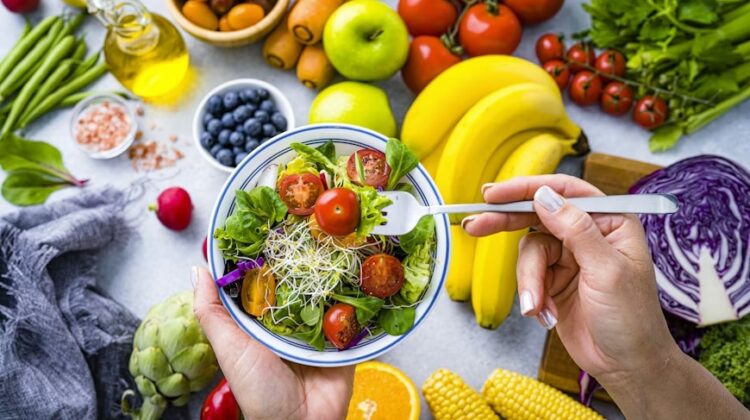
The Top 7 Superfoods You Need in Your Diet Right Now
I used to roll my eyes at the word “superfood.”

It felt like marketing language — the kind of word that gets slapped on a $14 bag of dried berries at a health food store to justify the price tag. Every few months there would be a new one. Goji berries. Acai. Spirulina. Moringa. Each one arriving with breathless coverage promising it would transform your health, followed quietly by the next trend when the excitement died down.
So I get the skepticism. I really do.
But here is what changed my mind: I stopped looking at individual foods as magic bullets and started looking at the actual nutritional science behind why certain foods consistently show up in research on long-term health outcomes. And when you do that — when you strip away the marketing and look at what the evidence actually says — a handful of foods genuinely do stand apart from the rest.
Not because they cure diseases or erase years of bad habits overnight. But because they are so dense with the specific nutrients the human body needs, and so consistently linked to better health outcomes across decades of research, that calling them exceptional is not hype. It is just accurate.
These are those foods. Seven of them. Chances are you already know most of them. The goal of this article is not to introduce you to something exotic — it is to remind you why these particular foods are worth making a genuine, consistent habit of eating, and to give you enough of the real story behind each one that the habit actually sticks.
1. Berries — The Most Underrated Thing in Your Grocery Store
Let me make a case for berries that goes beyond “they taste good and have vitamin C.”
The thing that makes berries genuinely remarkable from a nutritional standpoint is their antioxidant content — specifically a group of compounds called anthocyanins, which give berries their deep blue, red, and purple colors. Anthocyanins are not just antioxidants in the vague, catch-all sense that the word sometimes gets used. They are specifically linked in research to reduced inflammation, improved cardiovascular health, better blood sugar regulation, and — in a growing body of studies — protection against cognitive decline as we age.
Blueberries in particular have been studied extensively in this area. Research from Harvard’s School of Public Health, tracking over 16,000 women over more than a decade, found that those who consumed the most blueberries and strawberries showed slower rates of cognitive aging — equivalent to being nearly two and a half years younger cognitively than those who ate the least. That is a meaningful finding, not a marginal one.
Strawberries bring an impressive vitamin C punch alongside their antioxidant load — a single cup delivers more than your full daily recommended intake. Raspberries are among the highest-fiber fruits available, with around eight grams per cup, which matters for gut health, blood sugar stability, and satiety. Blackberries offer one of the highest antioxidant concentrations of any food measured.
The practical beauty of berries is that they are accessible, affordable — especially frozen, which retains essentially all the nutritional value of fresh — and genuinely easy to incorporate into meals you are already eating. A handful over oatmeal in the morning. Blended into a smoothie. Eaten straight as a snack. The barrier to getting more berries into your life is almost zero, which makes the return on investment particularly high.
2. Leafy Greens — The Thing Every Nutritionist Agrees On
If you could find a single point of agreement among nutritionists, dietitians, and researchers who otherwise disagree about almost everything — low-carb versus high-carb, intermittent fasting versus regular meals, dairy versus no dairy — it would probably be this: eat more leafy greens.
The consensus around leafy greens is remarkable precisely because genuine consensus in nutrition science is rare. But the evidence is so consistent and so robust that it has essentially settled the argument.
Spinach is a good place to start because it is so versatile and so nutritionally dense that it almost feels unfair. Raw spinach is loaded with vitamins A, C, and K, along with iron, calcium, folate, and magnesium. It is also one of the better plant-based sources of lutein and zeaxanthin — two compounds with strong evidence behind them for protecting eye health and reducing the risk of macular degeneration as we age.
Kale earned its moment in the spotlight a few years ago and — unlike most food trends — genuinely deserved it. It is exceptionally high in vitamin K, which plays a critical role in bone health and blood clotting, and contains compounds called glucosinolates that are being actively researched for their potential role in cancer prevention. The research on that particular application is still developing, but the broader nutritional case for kale does not depend on it.
Swiss chard does not get enough credit. It is one of the better dietary sources of magnesium — a mineral that most adults are chronically deficient in and that plays a role in over three hundred enzymatic processes in the body, including blood pressure regulation and sleep quality.
The challenge most people have with leafy greens is not knowing why to eat them — it is knowing how to make them something they actually want to eat. The answer is usually fat and acid. A good olive oil, some lemon juice or vinegar, and a pinch of salt transforms most leafy greens from something dutiful into something genuinely enjoyable. Sauté spinach with garlic and olive oil and it becomes a completely different experience from a raw handful. Massage kale with olive oil and lemon for a few minutes and it softens into something considerably more pleasant than its raw reputation suggests.
3. Avocado — Proof That Fat Was Never the Enemy
For about three decades, starting in the 1960s, dietary fat was the villain in mainstream nutrition advice. Low-fat everything. Fat-free products that replaced fat with sugar and still somehow got labeled as healthy. An entire generation was told that the fat in avocados was bad for them.
The science has long since moved on from that position. We now understand that dietary fat is not monolithic — that the type of fat matters enormously — and that the monounsaturated fats that avocados are primarily composed of are not just harmless but actively beneficial, particularly for cardiovascular health.
The specific fat that makes up the majority of an avocado’s fat content is oleic acid — the same fat that is responsible for many of olive oil’s documented health benefits. Research consistently shows that replacing saturated fats in the diet with oleic acid improves the ratio of LDL to HDL cholesterol, reduces markers of inflammation, and lowers cardiovascular risk.
But the avocado’s nutritional story does not begin and end with fat. A single avocado contains more potassium than a banana — a fact that consistently surprises people. Potassium is critical for blood pressure regulation, and most adults consume significantly less than the recommended daily amount. Avocados are also a meaningful source of folate, vitamin E, vitamin K, and B vitamins, alongside around ten grams of fiber.
There is also a practical nutritional benefit that rarely gets mentioned: fat helps your body absorb fat-soluble vitamins — A, D, E, and K — from other foods. Adding avocado to a salad full of leafy greens does not just add nutrients from the avocado itself. It significantly increases your absorption of the nutrients already in the greens. The whole becomes meaningfully greater than the sum of its parts.
4. Nuts and Seeds — Small Things With an Outsized Impact
There is a study I find myself coming back to whenever someone tells me they are avoiding nuts because of the calorie content. The PREDIMED study — one of the largest and most rigorous trials on diet and cardiovascular health ever conducted — found that participants assigned to a Mediterranean diet supplemented with mixed nuts had a 30% lower rate of major cardiovascular events compared to a control group following a low-fat diet. Thirty percent. From nuts.
The fear of nuts as a high-calorie food to be avoided is one of the more persistent and counterproductive pieces of nutritional folklore floating around. Yes, nuts are calorie-dense. They are also among the most nutritionally complete snack foods available, and the evidence consistently shows that people who eat nuts regularly tend to have better weight management outcomes than those who avoid them — likely because the combination of protein, fiber, and healthy fat produces sustained satiety that prevents the blood sugar swings and subsequent cravings that drive overeating.
Almonds are a reliable daily option — high in vitamin E, magnesium, and protein, with a fiber content that makes them genuinely filling. Walnuts have the strongest research base for brain health specifically, driven by their unusually high concentration of ALA omega-3 fatty acids. A small handful of walnuts daily has been associated in multiple studies with improved cognitive function and reduced markers of inflammation.
Chia seeds deserve their reputation. Two tablespoons delivers around ten grams of fiber, five grams of protein, and a meaningful dose of omega-3 fatty acids — in a format that adds almost no flavor to whatever you add it to, making it one of the easiest nutritional upgrades available. Stir it into yogurt, add it to a smoothie, or let it sit in almond milk overnight for a chia pudding that genuinely requires almost no effort.
Flaxseeds offer a similar nutritional profile but are best consumed ground — whole flaxseeds tend to pass through the digestive system without being fully broken down, which means you absorb significantly less of their nutritional content than the label implies.
5. Whole Grains — Not All Carbohydrates Are Created Equal
The conversation around carbohydrates has been so polarized for so long — everyone either avoiding them entirely or defending them wholesale — that it has become difficult to have a nuanced conversation about the actual distinction that matters most: the difference between refined grains and whole grains.
Refined grains — white bread, white rice, most commercial pasta and baked goods — have had the bran and germ stripped away during processing, taking with them the majority of the fiber, vitamins, and minerals that made the grain nutritionally valuable in the first place. What is left is essentially a fast-digesting carbohydrate that spikes blood sugar rapidly and delivers relatively little nutritional value in exchange.
Whole grains are a fundamentally different food. The fiber, vitamins, and minerals are intact. The digestion is slower. The blood sugar response is more gradual and stable. The nutritional return is dramatically higher.
Oats are probably the most accessible and best-researched entry point into whole grains. The soluble fiber in oats — specifically a compound called beta-glucan — has particularly strong evidence behind it for reducing LDL cholesterol levels. Enough evidence, in fact, that the FDA has approved a health claim on oat products relating to cardiovascular risk reduction. That kind of regulatory acknowledgment of a nutritional benefit is rare and meaningful.
Quinoa earns its place on this list partly because of what it is not. Unlike most grains, which are incomplete proteins, quinoa contains all nine essential amino acids — making it one of the very few plant foods that qualifies as a complete protein source. For anyone eating a plant-based diet or trying to diversify their protein sources, quinoa is worth incorporating.
Brown rice is nutritionally superior to white rice in essentially every dimension — more fiber, more vitamins, more minerals, slower digestion — though it does require adjusting to a different texture and slightly longer cooking time, which is the main reason most people default to white.
6. Fatty Fish — The Omega-3 Conversation We Need to Have
Most people have heard that omega-3 fatty acids are good for them. Far fewer people understand what omega-3s actually do in the body, why deficiency is so common, and why getting them from food rather than supplements tends to produce better outcomes in research.
Omega-3 fatty acids — specifically EPA and DHA, the forms found in fatty fish — are structural components of cell membranes throughout the body, with particularly high concentrations in the brain. They play a fundamental role in regulating inflammation, supporting cardiovascular function, and maintaining the structural integrity of neurons. Low levels of EPA and DHA are consistently associated in research with higher rates of depression, cognitive decline, cardiovascular disease, and inflammatory conditions.
The reason deficiency is so common in modern diets is straightforward: the primary dietary sources of EPA and DHA are fatty fish, and most people do not eat enough of them. The conversion of plant-based omega-3s — like the ALA found in flaxseeds and walnuts — into EPA and DHA in the body is inefficient enough that plant sources alone are rarely adequate for optimal levels.
Salmon is the gold standard here — a single three-ounce serving of wild-caught salmon delivers well over two grams of combined EPA and DHA, along with high-quality protein, vitamin D, and B12. Sardines and mackerel offer similar omega-3 profiles at a fraction of the cost, which matters for making fatty fish a sustainable regular habit rather than an occasional treat.
The research consistently suggests that two servings of fatty fish per week is the threshold at which meaningful cardiovascular and cognitive benefits become measurable. That is a specific and achievable target — two dinners a week — that is worth building into your routine deliberately rather than leaving to chance.
7. Turmeric — Ancient Wisdom That the Science Is Catching Up With
Turmeric has been used in Ayurvedic and traditional Chinese medicine for thousands of years as an anti-inflammatory agent. For a long time, Western medicine treated this with the polite skepticism it tends to apply to traditional remedies. Then researchers started isolating the active compound — curcumin — and studying it systematically, and the results have been interesting enough to attract serious scientific attention.
Curcumin is a potent anti-inflammatory compound. The mechanism is well-understood: it inhibits multiple molecular pathways that drive the inflammatory response, including NF-kB — a molecule that plays a central role in chronic inflammation and is implicated in the development of a wide range of diseases including heart disease, cancer, and Alzheimer’s. This is not folk wisdom anymore. It is molecular biology.
The research on curcumin and brain health is particularly compelling. Studies have found that curcumin can cross the blood-brain barrier — something many compounds cannot do — and has shown the ability to increase levels of BDNF, a growth hormone that promotes the formation of new neural connections. Low BDNF levels are associated with depression and neurodegenerative conditions. Raising them has measurable cognitive and mood effects.
The catch with turmeric is bioavailability — curcumin is poorly absorbed from the digestive tract on its own. The practical solution is straightforward: black pepper. Piperine, the active compound in black pepper, increases curcumin absorption by up to 2,000%. A pinch of black pepper combined with turmeric is not a quirky chef’s trick — it is basic chemistry that makes the difference between a spice that does something and one that largely passes through you unused.
Adding turmeric to curries, soups, roasted vegetables, and smoothies — alongside a small amount of black pepper and a fat source, which also aids absorption — is a genuinely easy habit with a nutritional payoff that is not trivial.
Putting It Together Without Overthinking It
I want to close with something practical, because I think one of the ways that nutrition content fails people is by making healthy eating feel like a project requiring constant management.
It does not have to be.
If you looked at this list and felt overwhelmed — like you would need to completely overhaul how you eat to incorporate all seven of these foods — I want to offer a simpler frame. Pick two. Just two from this list that you do not currently eat regularly and find one way to add each of them to your weekly routine. Do that for a month until it feels normal. Then add another.
That approach — slow, sustainable, cumulative — is how eating habits actually change in ways that last. Not a dramatic overhaul that holds for three weeks and then collapses, but a series of small additions that compound over time into a genuinely different way of eating.
The seven foods on this list are not rare, expensive, or difficult to prepare. They are berries and greens and avocados and nuts and grains and fish and a spice you can buy for two dollars. They are already in most grocery stores. They fit into most budgets. They work in most kitchens.
The only thing they require is a decision to start making them a regular part of how you eat. And that decision — unlike most decisions about health — is genuinely, completely within your control starting today.
If you found this useful, share it with someone who is trying to eat a little better without making it complicated. And browse more health and nutrition content right here on DennisMaria.
This article is for general informational purposes only and does not constitute medical or dietary advice. Always consult a qualified healthcare professional or registered dietitian before making significant changes to your diet, particularly if you have existing health conditions.