
Understanding Climate Change and Its Impact on the Planet’s Health
There is a particular psychological defence mechanism that humans deploy when confronted with problems too large and too slow-moving to feel urgent in the way that immediate threats feel urgent.

We know the problem is real. We accept the evidence. We agree, in principle, that something should be done. And then we return to our lives largely unchanged, because the gap between what we intellectually understand and what we emotionally process as genuinely threatening is wide enough to drive through comfortably.
Climate change has lived in that gap for most of the fifty years since scientists first brought it to public attention. A future problem. A problem for governments and corporations and international bodies to solve. A problem serious enough to acknowledge but not quite urgent enough — not yet, not here, not for me specifically — to fundamentally reorganise how we live and what we demand from the systems that govern us.
That gap is closing. Not because the rhetoric has become louder — it has been loud for decades and loudness has not worked. But because the evidence has become undeniable in a way that is no longer abstract. Because the wildfires, the floods, the heat events, the crop failures, the species disappearing, the coastlines retreating are not projections anymore. They are the news.
This article is an attempt to understand climate change honestly — its causes, its evidence, its consequences — in a way that is neither alarmist nor dismissive, because both responses have failed us, and what we need now is clarity.
What Climate Change Actually Is — And What It Is Not
Climate change is not the weather. This distinction matters more than it might seem, because the conflation of the two is responsible for a significant amount of confusion and an even more significant amount of bad-faith argument.
The weather is what is happening outside your window right now — the temperature, the wind, the rain or its absence. It is local. It is short-term. It varies from day to day and from week to week in ways that are neither indicative of nor contradicted by longer-term trends.
Climate is the pattern. The long-term statistical behaviour of the atmosphere over a region or the planet — the average temperatures across decades, the typical distribution of precipitation across seasons, the frequency and intensity of extreme events. When scientists talk about climate change, they are talking about measurable, sustained shifts in these long-term patterns — shifts that are now occurring at a rate and in a direction that the historical record, going back hundreds of thousands of years, shows to be extraordinary.
The confusion between weather and climate is routinely exploited in public discourse. A cold winter day is cited as evidence against global warming. A hot summer day is dismissed as just a weather event unrelated to climate. Both moves are wrong, and understanding why requires understanding the difference between the noise of daily weather and the signal of decadal climate trends.
Climate change, specifically, refers to the pattern of changes being driven primarily by human activities — the emission of greenhouse gases into the atmosphere at rates and concentrations that are altering the planet’s energy balance, trapping heat that would otherwise escape to space, and producing a sustained warming trend with cascading effects on every system that the climate touches.
What Is Actually Driving It — The Honest Accounting
The Greenhouse Effect and Why It Has Gone Wrong
The greenhouse effect itself is not a problem. It is, in fact, a prerequisite for life on Earth as we know it. Without naturally occurring greenhouse gases — water vapour, carbon dioxide, methane — the planet would be approximately thirty-three degrees Celsius colder than it currently is. Life as we know it would not exist.
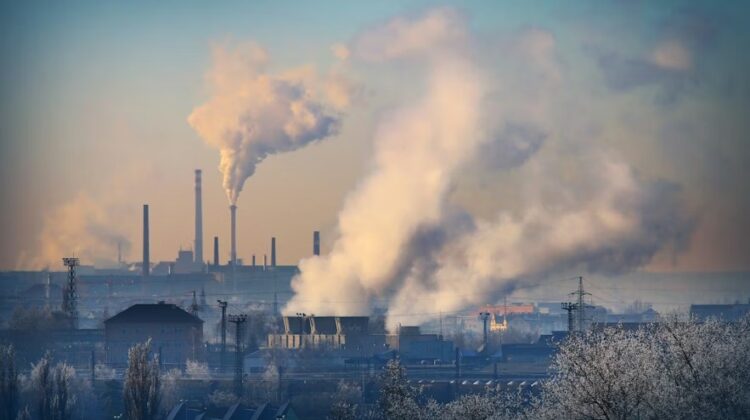
The problem is not the greenhouse effect. The problem is that human industrial activity — over roughly two hundred and fifty years, and at accelerating rates over the past century — has added greenhouse gases to the atmosphere at concentrations that go far beyond what natural systems can process or absorb. The concentration of carbon dioxide in the atmosphere, which sat at approximately 280 parts per million for the ten thousand years before industrialisation, has risen to over 420 parts per million today. The rate of increase is faster than anything in the ice core record going back eight hundred thousand years.
Carbon dioxide stays in the atmosphere for a very long time. The CO2 emitted by the industrial revolution of the nineteenth century is still up there. The CO2 being emitted today will still be affecting the climate in the twenty-second century. This is one of the most important and most poorly communicated features of the climate problem — the lag between emissions and their full consequences means that the climate we are experiencing today reflects choices made decades ago, and the choices being made today will determine the climate that people living decades from now will inherit.
Fossil Fuels — The Primary Driver
The burning of fossil fuels — coal, oil, and natural gas for energy, transportation, and industrial processes — is responsible for approximately three-quarters of current greenhouse gas emissions globally. Every tonne of coal burned, every barrel of oil refined and combusted, every cubic metre of natural gas used for heating or power generation releases carbon dioxide that has been locked away in geological formations for millions of years into an atmosphere that has not contained it for millions of years.
The relationship between fossil fuel combustion and climate change is the most thoroughly established causal relationship in the climate science literature. It is not a correlation observed in data and inferred as causation. It is physics — the radiative properties of CO2 and other greenhouse gases are measured directly in laboratories, and the mechanism by which increased atmospheric concentration produces warming is understood from first principles, not just from statistical observation.
Deforestation — The Second Major Driver
Forests are one of the planet’s primary carbon sinks — absorbing CO2 from the atmosphere through photosynthesis and storing it in biomass and soil. When forests are cleared — for agriculture, for timber, for urban expansion — that stored carbon is released. And the sink capacity of the cleared area is lost, reducing the planet’s ability to absorb ongoing emissions.
Tropical deforestation is particularly significant because tropical forests store and absorb carbon at higher rates than temperate forests, and because the rate of tropical forest loss has remained high despite decades of awareness of the problem. The Amazon rainforest — sometimes called the lungs of the Earth for its extraordinary carbon absorption — has been a net carbon emitter in some recent years, as emissions from deforestation and fire exceeded the absorption of the remaining forest. This represents a tipping point shift with implications that extend well beyond Brazil.
Industrial and Agricultural Processes
Beyond fossil fuels and deforestation, a range of industrial and agricultural processes contribute significantly to greenhouse gas emissions. Cement production — which involves heating limestone and releasing CO2 — is responsible for approximately eight percent of global emissions. Steel production, chemical manufacturing, and refrigeration systems release various greenhouse gases at quantities that aggregate to significant global impact.
Agriculture is a major source of methane — from livestock digestion and manure management — and of nitrous oxide from fertiliser application. Methane is approximately eighty times more potent than CO2 as a greenhouse gas over a twenty-year period, which makes agricultural emissions more significant, tonne for tonne, than their raw quantity suggests.
The Evidence — What Science Has Established Beyond Reasonable Doubt
The evidence that climate change is occurring and that human activity is the primary driver is, at this point, as thoroughly established as any conclusion in science. The claim of scientific uncertainty that was industriously manufactured by fossil fuel interests in the 1980s and 1990s — when internal documents from those companies show their own scientists understood the risks clearly — does not reflect the actual state of scientific knowledge.
Here is what the evidence shows.
Global average temperatures have risen by approximately 1.2 degrees Celsius since pre-industrial times. This may sound modest, but for context: the difference in global average temperature between the last ice age and today is approximately four to seven degrees Celsius. The difference between a stable climate and one that has shifted from one state to another is measured in fractions of a degree, not in double digits. The 1.2 degrees already achieved has produced changes across every climate system that scientists have measured.
The Arctic is warming approximately four times faster than the global average. Arctic sea ice extent has declined dramatically over the satellite observation period, with summer sea ice now regularly reaching record lows. Permafrost — permanently frozen ground that covers large areas of Siberia, Alaska, and Canada — is thawing, releasing methane stores that had been locked in place for thousands of years, creating a feedback mechanism that is not under any current emission reduction framework.
Sea levels are rising. The mechanisms are two — thermal expansion of warming ocean water and melting of land-based ice sheets in Greenland and Antarctica. Current rates of sea level rise are approximately three to four millimetres per year and accelerating. The implications for coastal populations — roughly forty percent of the global population lives within one hundred kilometres of a coastline — are serious and becoming urgent rather than future.
Extreme weather events are becoming more frequent and more intense. This is the evidence that is most viscerally accessible — the Australian bushfires that burned for months across an area larger than many European countries, the South Asian heat events that pushed temperatures past the threshold for human survival, the Mediterranean floods, the unprecedented wildfire seasons across the American West, the intensification of Atlantic hurricanes. Attribution science — which now allows researchers to quantify the contribution of climate change to specific extreme events — has established that many of these events were made significantly more likely or more intense by anthropogenic warming.
Ocean chemistry is changing. The oceans have absorbed approximately thirty percent of the CO2 emitted by human activity, which has served to slow atmospheric warming. The cost of this absorption is ocean acidification — a measurable reduction in ocean pH that has already caused bleaching of coral reefs at unprecedented scales and poses severe risks to marine ecosystems and the food chains they support.
What Is Actually Being Lost — The Full Cost Beyond Temperature
The climate numbers — degrees of warming, parts per million of CO2, millimetres of sea level rise — are important, but they can obscure the thing that actually matters: what those numbers mean for living systems and living people.
Biodiversity Under Pressure
Species survive in environments suited to the conditions they evolved for. When those conditions shift — when temperatures rise faster than species can adapt or migrate, when precipitation patterns alter the availability of food and water, when the timing of seasonal events gets out of sync with the biological rhythms of dependent species — the survival of those species is genuinely threatened.
Current extinction rates are estimated at one hundred to one thousand times the background rate — the rate that occurs in the absence of major extinction events. Climate change is a significant driver of this acceleration, combining with habitat loss, pollution, and overexploitation to produce what biologists call the sixth mass extinction. The last mass extinction was sixty-six million years ago, when the asteroid that killed the non-avian dinosaurs struck the Yucatan Peninsula.
The loss of species matters for reasons beyond the intrinsic value of biodiversity. Ecosystems are functional systems — their services underpin human survival in ways that are easy to overlook precisely because they have always been there. Pollination of crops. Purification of water. Regulation of flood and drought. Carbon sequestration. Soil formation. The degradation of ecosystem function through biodiversity loss is a consequential and underappreciated dimension of the climate problem.
Human Health — The Consequences Already Unfolding
The health consequences of climate change are not primarily abstract or future. They are present and documented.
Heat-related mortality is increasing in direct proportion to the increase in frequency and intensity of extreme heat events. The European heat wave of 2003 killed approximately seventy thousand people. The heat events since then have been more frequent, and the population most at risk — the elderly, those without access to air conditioning, outdoor workers — is large and growing. The relationship between heat exposure and health outcomes is direct and well-established.
The geographic range of vector-borne diseases is expanding as warming temperatures make previously inhospitable regions suitable for mosquitoes and other disease vectors. Malaria, dengue fever, Zika, and Lyme disease are all appearing in regions where they were not previously endemic, as warming allows the insects that carry them to survive and reproduce at higher latitudes and altitudes.
Food and water security are under direct pressure from the changing precipitation patterns and the extreme weather events that climate change is intensifying. The regions most exposed to these pressures are precisely the regions — in sub-Saharan Africa, South Asia, small island developing states — that have contributed least to the greenhouse gas emissions driving them. The injustice of this distribution is not incidental. It is one of the defining moral dimensions of the climate crisis.
The Displacement of People
One of the most consequential and least adequately discussed consequences of climate change is the displacement of human populations from places that are becoming uninhabitable.
The mechanisms are multiple. Low-lying coastal areas and island nations facing inundation from rising seas and storm surge. Agricultural regions experiencing the permanent shift of rainfall patterns that made farming viable for generations. Areas where extreme heat events are becoming frequent enough to make outdoor work — and in some cases, simply living — physiologically dangerous for significant portions of the year.
The World Bank has estimated that internal climate migration within developing countries could reach as many as two hundred and sixteen million people by 2050 under high-emission scenarios. The political, social, and security implications of movements of this scale dwarf anything that has occurred in recorded history. And the international frameworks for addressing climate displacement — distinct from refugee frameworks built around political persecution — barely exist.
The Economic Reality — Why This Is Increasingly a Financial Story
The framing of climate action as an economic sacrifice — the idea that addressing climate change requires accepting reduced prosperity — has been one of the most effective arguments used to slow meaningful policy response. In 2026, that framing is increasingly difficult to sustain against the evidence.
The economic costs of climate change itself — of the extreme events, the agricultural losses, the infrastructure damage, the health system burden, the displacement — are already running into trillions of dollars annually and growing. Swiss Re, one of the world’s largest reinsurance companies, estimated that climate change could reduce global GDP by up to eighteen percent by 2050 under business-as-usual scenarios — a figure that dwarfs any estimate of the cost of the transition to clean energy.
The cost of renewable energy has fallen dramatically enough that solar and wind are now the cheapest sources of new electricity generation in virtually every market on the planet. The economic argument for the transition has inverted — the question is no longer whether we can afford to address climate change but whether we can afford not to.
What remains is the political economy problem — the distribution of transition costs and benefits across time, geography, and economic sector in ways that create concentrated losers in specific communities and industries, and diffuse winners across populations and futures. This distribution problem is real and deserves serious attention. It does not change the direction of travel. It determines whether the journey is equitable.
What Actually Needs to Happen — And What You Can Do
The scale of the climate problem requires action at scales that individuals cannot produce alone. Systemic change — in energy systems, in transportation infrastructure, in agricultural practices, in land use policy, in the incentive structures that currently make carbon-intensive choices cheaper than low-carbon alternatives — requires policy responses at national and international levels.
This is sometimes used to argue that individual action is pointless — that changing your diet or your energy provider is rearranging deck chairs on a sinking ship while the engines that are actually sinking it continue unimpeded. This argument has some validity as a critique of the emphasis on individual action in climate communication at the expense of systemic action. It is less valid as a conclusion that individual action has no role.
Individual choices aggregate into market signals. Market signals influence corporate behaviour and investment decisions. Individual political engagement — voting, advocacy, the public expression of priorities — influences the policy environment. And the social normative effect of visible choices — the permission-giving that comes from seeing people around you making different decisions — has real and documented influence on the pace of cultural and behavioural change.
At the individual level, the highest-impact actions are well-established. The consumption of less animal products — particularly beef and dairy, whose production is extraordinarily carbon-intensive relative to plant-based alternatives. The choice of electric over combustion-engine vehicles where that choice is accessible. The reduction of air travel where alternatives exist. The political engagement that treats climate as the central issue it is in electoral decisions.
At the collective and political level, the most important single intervention is a meaningful price on carbon — a policy mechanism that makes the true cost of carbon-intensive activity visible in prices, creating economic incentives for lower-carbon choices at every level of the economy. This policy has broad support among economists across the political spectrum and has been successfully implemented at meaningful scale in a growing number of jurisdictions.
The Honest Assessment of Where We Are
Let me be direct about something that the optimistic and pessimistic framings of the climate crisis both tend to obscure.
We are not on track. The commitments made by governments under international climate agreements are not being met. The emissions reductions that have occurred, while real and meaningful, are not yet occurring at the pace that the physical science says is necessary to avoid the more severe consequences of warming. The gap between stated commitments and implemented policy remains large. The interests invested in the continuation of carbon-intensive economic activity remain powerful.
At the same time: the direction of travel has genuinely changed in ways that were not true a decade ago. The cost of clean energy has fallen faster than virtually any model predicted. The electric vehicle transition has accelerated past industry projections. The political salience of climate has increased in most major democracies. The economic case for the transition has become overwhelming.
This is not a comfortable middle-ground position designed to avoid controversy. It is an honest reading of a situation that is genuinely both more dire than much public discourse acknowledges and more tractable than the despair narrative suggests.
The defining variable is time. The climate system responds to the accumulation of greenhouse gases in the atmosphere over decades. Every year of continued high emissions narrows the available path to the outcomes that avoid the worst consequences. Every year of accelerated transition preserves more of what we are trying to protect.
Time is the one resource that cannot be recovered once it is spent. And the scientific consensus on how much of it remains for meaningful action is unambiguous and tightening.
If this piece gave you something clearer to hold onto about where we actually are with climate change, share it. The conversation this issue needs is one that starts from honesty rather than either despair or false comfort. And find more science and environment content right here on DennisMaria.