
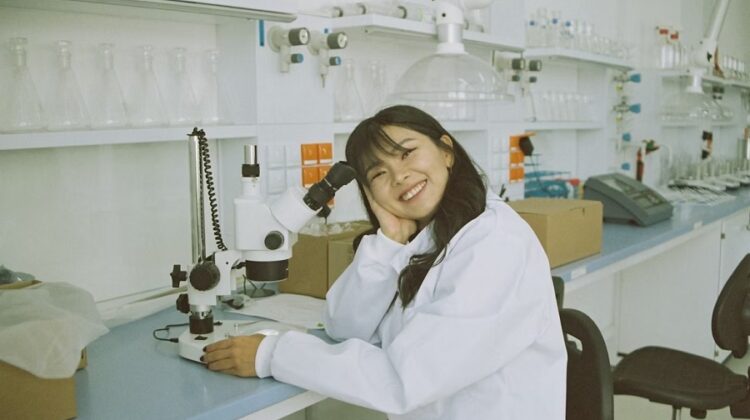
10 Inspirational Female Scientists Who Changed the World
There is a particular kind of courage that does not get talked about enough in science history.
Not the courage of the discovery itself — the late nights, the failed experiments, the years of work that might produce nothing. That courage is real and deserves its recognition. But underneath it, in the stories of the women on this list, is a different kind of courage entirely. The courage to keep working in rooms that were not built for you. To pursue knowledge in institutions that debated whether you belonged there. To produce discoveries that reshaped human understanding, in some cases while your name was being quietly removed from the story of how that reshaping happened.
The ten scientists in this article were not inspirational in the soft, motivational-poster sense of the word. They were inspirational in the most concrete sense available: they did extraordinary things under genuinely difficult conditions, and the world is measurably different because they existed.
Some of them were celebrated in their lifetimes. Some were ignored, diminished, or actively denied the credit their work deserved. Some died before science caught up with what they had found. All of them kept going anyway.
That, as much as any specific discovery, is what makes these stories worth knowing.
1. Marie Curie (1867–1934) — The Woman Who Rewrote Physics
Marie Curie is the name most people reach for when asked to name a female scientist, which means she is also the name most likely to be mentioned without anyone really knowing what she did. So let us be specific.
Marie Curie discovered two elements — polonium, which she named after her homeland of Poland, and radium. She coined the term radioactivity. She was the first person — not the first woman, the first person — to win two Nobel Prizes, in two different scientific disciplines: Physics in 1903 and Chemistry in 1911. She remains the only person in history to have achieved this. She developed mobile X-ray units during the First World War — nicknamed “petites Curies” by French soldiers — that brought diagnostic imaging directly to the front lines and saved an estimated one million lives.
She did all of this as a woman working in a scientific establishment that was openly hostile to her presence. The French Academy of Sciences refused to admit her — even after her second Nobel Prize. When she applied for membership, she was rejected by two votes, and several members of the Academy made clear that the rejection was based on her sex. The Swedish Academy, in awarding her the 1903 Nobel Prize in Physics, initially intended to give it only to her husband Pierre and her colleague Henri Becquerel — it was Pierre himself who insisted that Marie’s contribution be recognised.
She worked with radioactive materials throughout her career without adequate protection because the health risks were not yet understood, and she died in 1934 from aplastic anaemia almost certainly caused by decades of radiation exposure. Her laboratory notebooks from the 1890s are still so radioactive that they are kept in lead-lined boxes in the Bibliothèque nationale de France. Researchers who wish to consult them must sign a waiver acknowledging the radiation risk.
The depth of her contribution to science is matched by the depth of the institutional resistance she navigated throughout her life. Both deserve to be known.
2. Ada Lovelace (1815–1852) — She Saw What Computers Could Be Before Computers Existed
Ada Lovelace was the daughter of the poet Lord Byron and the mathematician Anne Isabella Milbanke, and she inherited both her father’s imagination and her mother’s mathematical precision in a combination that produced something genuinely unprecedented.
In the 1830s, the mathematician Charles Babbage was designing a mechanical computing machine he called the Analytical Engine. An Italian mathematician, Luigi Menabrea, wrote a paper describing the machine in French, and Lovelace was asked to translate it into English. She did — and then added her own notes, which turned out to be three times the length of the original paper and considerably more important.
In those notes, Lovelace did something no one had done before. Babbage and others conceived of the Analytical Engine primarily as a calculator — an extraordinarily sophisticated one, but fundamentally a machine for computing numbers. Lovelace saw something else entirely. She saw that the machine could manipulate any kind of symbol according to rules — not just numbers, but music, letters, any information that could be encoded symbolically. She wrote what is now recognised as the first algorithm intended to be processed by a machine — a method for calculating Bernoulli numbers — making her the world’s first computer programmer by more than a century.
She died of cancer at thirty-six, the same age as her father, having published only the one set of notes. The full significance of what she had understood was not recognised until Alan Turing, working on his foundational theory of computation in the 1930s, engaged directly with her ideas. The United States Department of Defense named a programming language Ada in her honour in 1980.
She had grasped the essential nature of the modern computer in 1843, using mathematics to describe a machine that would not exist for another hundred years.
3. Rosalind Franklin (1920–1958) — The Woman Behind the Double Helix
The story of how the structure of DNA was discovered is one of the most important and most troubling stories in the history of science. Rosalind Franklin’s role in it is both central and, for most of a generation, almost entirely invisible in the official account.
Franklin was an expert in X-ray crystallography — a technique for determining the structure of molecules by analysing how X-rays scatter when passed through them. She applied this expertise to DNA at King’s College London and produced what has been described as one of the finest X-ray photographs ever taken — an image known as Photo 51, which showed with remarkable clarity that DNA had a helical structure.
Without Franklin’s knowledge or permission, her colleague Maurice Wilkins showed Photo 51 to James Watson. Watson and Francis Crick, working at Cambridge, used the structural information it contained — along with data from Franklin’s unpublished research reports, which were also shared without her knowledge — to build their model of the double helix. They published their paper in Nature in April 1953. Franklin’s contribution was acknowledged only in a footnote.
In 1962, Watson, Crick, and Wilkins were awarded the Nobel Prize in Physiology or Medicine for the discovery of the structure of DNA. Franklin was not included — she had died of ovarian cancer in 1958 at age thirty-seven, and the Nobel Prize is not awarded posthumously. Whether she would have been included had she lived is a question the history of science does not allow us to answer.
What we can say is this: the photograph that provided the crucial structural evidence for one of the most important scientific discoveries of the twentieth century was hers. The credit she received during her lifetime, and for decades after it, was not proportionate to that contribution. Her reputation has been substantially rehabilitated since — but the rehabilitation came too late for her to know it, and required the active work of historians of science to reverse a deliberate diminishment.
4. Jane Goodall (1934–Present) — The Woman Who Changed How We Understand Ourselves
In 1960, a twenty-six-year-old woman with no university degree arrived in what is now Tanzania with her mother and a notebook, and began a study of chimpanzees in the Gombe Stream reserve that would run for decades and permanently change our understanding of primates — and in doing so, our understanding of ourselves.
Jane Goodall was sent by the paleontologist Louis Leakey specifically because she had no formal scientific training. Leakey believed that trained scientists arrived in the field with preconceptions that shaped their observations. He wanted someone who would see what was actually there.
What she saw dismantled several of the most confidently held assumptions in primatology. She observed chimpanzees using tools — stripping leaves from twigs to extract termites from mounds — overturning the scientific consensus that tool use was uniquely human. “Now we must redefine tool, redefine Man, or accept chimpanzees as humans,” Leakey wrote when she reported the finding. She documented chimpanzee social structures, emotional lives, and conflict behaviours — including warfare and infanticide — that revealed a complexity of inner life that the scientific establishment had been reluctant to attribute to non-human animals.
She was initially refused admission to Cambridge University’s PhD program on the grounds that she lacked a degree. Cambridge eventually admitted her, and she became one of only eight people in the university’s history to receive a doctorate without first completing an undergraduate degree. Her 1986 book “The Chimpanzees of Gombe” is considered the definitive scientific work on chimpanzee behaviour.
Since the 1980s she has devoted herself to conservation and advocacy, founding the Jane Goodall Institute and the Roots & Shoots youth programme, and travelling approximately three hundred days a year to speak about wildlife conservation and environmental protection.
She is ninety years old and has not stopped.
5. Rachel Carson (1907–1964) — The Scientist Who Started the Environmental Movement
Rachel Carson was a marine biologist who worked for the US Fish and Wildlife Service and wrote three books about the ocean that made her one of the most widely read science writers of the mid-twentieth century. She was not an activist. She was a scientist who believed that if people understood what was happening to the natural world, they would care about protecting it.
In 1962 she published “Silent Spring” — an investigation into the effects of synthetic pesticides, particularly DDT, on birds, insects, soil, and water. The book documented, with meticulous scientific evidence, how pesticides were moving through ecosystems in ways that their manufacturers had not predicted and that government regulators had not monitored. She showed that DDT was accumulating in the fatty tissues of animals up the food chain, reaching concentrations in predators that disrupted reproduction — that the spring was becoming silent because the birds were disappearing.
The chemical industry responded with one of the most aggressive corporate campaigns against a scientific work in American history. Carson was attacked personally — her scientific credentials were questioned, her single status was used to imply that she was unnatural, and her credibility was challenged by industry-funded scientists. The Velsicol Chemical Corporation threatened her publisher with legal action. One industry spokesman suggested that the book was the work of a communist sympathiser.
She had been diagnosed with breast cancer before the book was published. She died in 1964, two years after its release, knowing that it had started a national conversation but not knowing how far that conversation would go.
It went very far. “Silent Spring” directly inspired the creation of the US Environmental Protection Agency in 1970, the banning of DDT in 1972, and the passage of the Clean Air Act, the Clean Water Act, and the Endangered Species Act. The modern environmental movement — the global conversation about human responsibility for the natural world — traces a significant part of its origin to this one woman, writing through illness, against the financial power of an industry determined to silence her.
6. Dorothy Hodgkin (1910–1994) — The Crystallographer Who Unlocked Life’s Molecules
Dorothy Hodgkin spent her career doing something that sounds almost impossible: she determined the three-dimensional structure of molecules that were too small to see by analysing how X-rays scattered when passed through their crystals. The technique was extraordinarily demanding — the mathematical calculations required, before computers existed to do them, were staggering in their complexity — and the molecules she chose to study were among the most complex biological molecules known.
She determined the structure of penicillin in the 1940s, providing the structural understanding that enabled synthetic production of the antibiotic and transformed medicine’s capacity to fight bacterial infection. She determined the structure of vitamin B12 in 1956 — a molecule of such complexity that her colleagues had doubted it could be done — work that earned her the Nobel Prize in Chemistry in 1964. She became the third woman in history to receive the Nobel Prize in Chemistry, after Marie Curie and her daughter Irène Joliot-Curie.
She did this while managing severe rheumatoid arthritis that progressively deformed her hands from her twenties onward, and while raising three children in an era when the combination of serious scientific work and family life was considered by most of the establishment to be incompatible for women.
She spent thirty-five years working on the structure of insulin — one of the most medically important molecules in the world — and completed it in 1969. The insulin structure work has been the foundation for decades of research into diabetes treatment and drug development.
A woman who could barely hold her equipment worked with it steadily enough, for long enough, to produce some of the most significant structural chemistry of the twentieth century.
7. Barbara McClintock (1902–1992) — The Geneticist Who Was Right Too Early
Barbara McClintock spent decades being largely ignored by the scientific community she had dedicated her life to. It is a story that says something important about how science actually works — and about what happens when a discovery arrives before the field is ready to understand it.
McClintock was a maize geneticist — she studied the genetics of corn — and in the 1940s and 1950s she made a discovery that directly contradicted one of the foundational assumptions of genetics at the time. The prevailing model held that genes were fixed in their positions on chromosomes — stable, static, inherited in predictable patterns. McClintock’s work showed something different. She found that certain genetic elements could move — could jump from one location in the genome to another, in ways that affected how other genes were expressed. She called them transposable elements. Today they are called transposons, or — more colloquially and rather perfectly — jumping genes.
When she presented this work, the reception was not hostile exactly. It was something harder to navigate than hostility: silence, confusion, and polite dismissal. The scientific community simply did not have the conceptual framework to evaluate what she was describing. The molecular biology revolution had not yet happened. The mechanisms she was proposing had no place in the models that existed.
She continued her work in relative isolation at Cold Spring Harbor Laboratory, publishing findings that accumulated over decades into a body of evidence that the field was not ready to absorb until the 1970s and 1980s, when molecular biology had advanced enough to confirm what she had found. Transposable elements turned out to be not a curiosity of maize genetics but a fundamental feature of virtually all genomes, including the human genome — where they constitute roughly half of our DNA and play critical roles in genetic regulation, evolution, and disease.
In 1983, at the age of eighty-one, Barbara McClintock was awarded the Nobel Prize in Physiology or Medicine — the only woman ever to receive an unshared Nobel Prize in that category. She accepted it with characteristic composure and then returned to her work.
She had been right for thirty years before the world caught up.
8. Chien-Shiung Wu (1912–1997) — The Physicist Who Proved the Theory Wrong
Chien-Shiung Wu arrived in the United States from China in 1936 intending to study at the University of Michigan. When she arrived and discovered that women were not allowed to use the student union’s main entrance, she changed her plans and enrolled at the University of California, Berkeley instead. This small episode of institutional sexism may have been fortunate for physics.
Wu became one of the most skilled experimental physicists in the world — a reputation that earned her the nickname “the First Lady of Physics” and, more tellingly, “the Chinese Madame Curie.” She worked on the Manhattan Project, developing techniques for separating uranium isotopes that were critical to the project’s success, though she was not informed of the project’s ultimate purpose.
Her most famous contribution came in 1956. Two theoretical physicists, Tsung-Dao Lee and Chen-Ning Yang, had proposed that a fundamental principle of physics called the conservation of parity — the assumption that nature does not distinguish between left and right, that mirror-image physical processes should behave identically — might not hold in certain subatomic interactions. This was considered an outrageous suggestion. Parity conservation was one of the pillars of physics. Nobody had tested it because nobody thought testing it was necessary.
Lee and Yang asked Wu to test it. She designed and conducted an experiment at absolute zero using radioactive cobalt-60 and demonstrated definitively that parity was not conserved — that nature did, in fact, distinguish between left and right in weak nuclear interactions. The result sent shockwaves through the physics community and required a fundamental revision of the standard model.
In 1957, Lee and Yang received the Nobel Prize in Physics for the theoretical prediction. Wu, who had designed and executed the experiment that proved it, did not. She received the Wolf Prize in Physics in 1978 — the first person to do so — and the National Medal of Science, and held a dozen honorary doctorates. She was never awarded the Nobel.
She expressed her feelings about the omission with characteristic directness: “I wonder whether the tiny atoms and nuclei, or the mathematical symbols, or the DNA molecules have any preference for either masculine or feminine treatment.”
9. Mae Jemison (1956–Present) — The Doctor Who Went to Space
Mae Jemison grew up watching the Apollo missions on television in Chicago, in an era when every astronaut NASA sent to space was white and male. She decided she would be an astronaut anyway. When people asked her what she wanted to be, she said astronaut. When adults suggested she might want to consider something more realistic, she considered their suggestion briefly and returned to her original answer.
She earned a degree in chemical engineering from Stanford and a medical degree from Cornell. She worked as a Peace Corps medical officer in West Africa. She applied to NASA’s astronaut program. On September 12, 1992, she launched aboard the Space Shuttle Endeavour, becoming the first African American woman to travel to space.
During the eight-day mission, which conducted experiments in life sciences and material science, Jemison conducted research into bone cell loss in space, motion sickness, and the behaviour of tadpoles in zero gravity. She also carried a poster of Bessie Coleman — the first African American woman to earn a pilot’s licence — as a tribute to the lineage of women who had pushed at boundaries before her.
Since leaving NASA she has founded companies working on science education and technology development, hosted a science television series, and launched the 100 Year Starship project — an initiative to ensure that human beings have the capability to travel to another star system within a century.
She has spoken often about the specific importance of her visibility as the first African American woman in space — not for herself, but for the young girls watching, the way she once watched, and deciding what to want.
10. Tu Youyou (1930–Present) — The Scientist Who Found the Cure in an Ancient Text
In 1967, with malaria killing hundreds of thousands of people across Southeast Asia and the malarial parasite developing resistance to the existing treatments, the Chinese government launched a secret military research project — Project 523 — to find a new solution. Tu Youyou was appointed to lead the effort.
She and her team began by reviewing ancient Chinese medical texts for references to treatments for fever — the symptom most associated with malaria. In a text from the fourth century AD, the “Handbook of Prescriptions for Emergency Treatment” written by the physician Ge Hong, she found a reference to the plant sweet wormwood — Artemisia annua — and a specific preparation method that involved soaking the plant in cold water rather than heating it. The cold-water detail was unusual and specific enough to catch her attention.
She hypothesised that the active compound in the plant might be destroyed by heat. She developed a low-temperature extraction process that preserved the compound — which she named artemisinin — and tested it first in animal models and then, when the animal results were promising, on herself. She volunteered to be the first human subject because she considered it her responsibility as the project leader not to ask others to take a risk she was not willing to take first.
Artemisinin worked. It worked against drug-resistant strains that had defeated existing treatments. Artemisinin-based combination therapies became the frontline treatment for malaria globally and are credited with saving millions of lives — particularly children under five in sub-Saharan Africa, where malaria mortality is concentrated. The World Health Organization estimates that artemisinin-based treatments have reduced malaria mortality rates by more than fifty percent in regions where they have been adopted.
In 2015, Tu Youyou was awarded the Nobel Prize in Physiology or Medicine — the first Chinese woman to receive a Nobel Prize in science, and the first mainland Chinese scientist to receive one in any scientific field. She accepted the prize at eighty-five years old, noting that the discovery belonged to Chinese medicine and to the team that had worked on it, not to herself alone.
She had found the cure to a disease that has killed more humans than any other in history, in a text written sixteen hundred years ago, by changing the temperature of the water.
What These Ten Lives Tell Us
Reading through these ten stories together, certain things become clear that are not obvious when the stories are told individually.
The first is the sheer scale of what was accomplished against what was resisted. These were not women who succeeded because the path was cleared for them. They succeeded while institutional barriers were actively in place — while they were being excluded from membership, denied credit, refused admission, paid less, published under initials to hide their gender, or simply ignored. The resistance was not incidental to their stories. It was the constant background condition of their working lives.
The second is how many of them were right before the world was ready to recognise it. McClintock’s jumping genes. Franklin’s structural data. Lovelace’s vision of what computation could be. The lag between the discovery and the recognition — sometimes years, sometimes decades — is not just an injustice to the individuals involved. It is a reminder of how much the scientific community’s capacity to receive new ideas has historically been shaped by who was delivering them.
The third is perhaps the most important. Every one of these women, at multiple points in their careers, was given reasons to stop. Institutional reasons, financial reasons, social reasons, reasons related directly to their gender and the assumptions that surrounded it. Every one of them found reasons to continue anyway. The persistence is not separate from the science. In most of these cases, it is what made the science possible.
These are not just stories about women. They are stories about what happens to knowledge when the people pursuing it are systematically undervalued. They are arguments, grounded in specific historical evidence, for why the question of who gets to do science — who is welcomed into its rooms, whose work is credited, whose contributions are recorded — is not a social justice question separate from the quality of science. It is a scientific question. About whether the knowledge we build is as good as it could be.
The answer, across these ten lives, is clear. It has not been. And the losses — the discoveries delayed, the contributions uncredited, the careers cut short by barriers that had nothing to do with ability — are losses that belonged not just to the women who experienced them, but to everyone who might have benefited sooner from what they knew.
These stories deserve to be shared further than the standard history of science has typically shared them. If one of these scientists was new to you, pass that name along. And explore more science and history content right here on DennisMaria.