Virtual Reality Is Going to Change Everything — And I’m Not Sure We’re Ready
There is a particular kind of silence that falls over a room when someone puts on a VR headset for the first time.

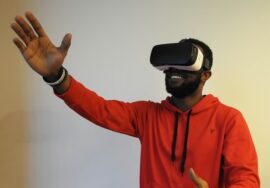
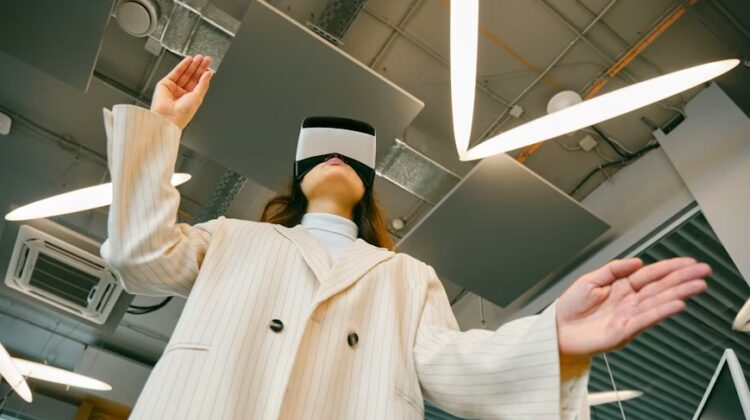
One second they are standing there, a normal person in a normal room. Then the headset goes on and something changes. Their head starts moving slowly, cautiously, like an animal trying to figure out new terrain. Their hands come up — reaching for things that are not there. Sometimes their body leans back, or their knees bend slightly, or they take a half-step sideways without realizing it.
They are somewhere else now. Physically present, mentally gone.
I have watched this happen to a lot of people over the past few years and it never stops being slightly unsettling to witness. Not because it looks frightening. Because it looks so convincing. Because whatever is happening inside that headset is clearly real enough — to the brain wearing it — to produce genuine physical responses in a body that has not moved an inch.
That is the thing about virtual reality that I think gets lost in all the breathless coverage about frame rates and resolution and the metaverse and whatever tech company is spending billions on it this week. VR is not just a fancy screen. It is a tool for rewriting, in real time, what a human brain believes is real.
And we are rolling it out to millions of people without having a serious conversation about what that means.
First, Let’s Give Credit Where It’s Due
I want to be clear about something before I get into the harder questions, because I think intellectual honesty requires it: virtual reality is producing some of the most genuinely exciting developments in technology right now, and some of those developments are making real differences in people’s lives.
Take medicine. Surgeons at hospitals around the world are now training in virtual operating rooms — performing complex procedures dozens of times in simulation before they ever hold a scalpel over a real patient. The implications for patient safety alone are significant. But VR’s medical applications go further than training.
At Cedars-Sinai Medical Center in Los Angeles, researchers found that patients who used immersive VR experiences during painful medical procedures reported significantly lower pain levels than those who did not. Not placebo-level lower. Meaningfully, measurably lower — enough that in some cases it reduced the need for pharmacological pain management. For anyone who has ever watched a family member go through a painful medical procedure and felt helpless about it, that research is genuinely moving.
Therapeutic applications are equally compelling. VR exposure therapy — where patients are gradually and safely introduced to the things that frighten them in a controlled virtual environment — has shown real promise for treating specific phobias, social anxiety, and certain presentations of PTSD. The ability to create a scenario that is frightening enough to be therapeutic but safe enough to be controlled is something that simply did not exist before this technology.
In education, VR is beginning to do something that textbooks and videos have never fully managed: put students inside the subject. Not reading about ancient Rome — walking through it. Not watching a diagram of the human heart — standing inside one as it beats around you. The difference in engagement and retention between passive learning and experiential learning is well-documented. VR makes experiential learning scalable in a way that field trips and physical simulations never could.
And in accessibility — a dimension of VR’s potential that rarely gets the attention it deserves — the technology is offering experiences to people who have been excluded from them by disability, geography, or economic circumstance. Someone who cannot travel can visit the world. Someone with severe social anxiety can practice social interactions in environments where the stakes feel lower. Someone confined to a hospital room can spend an afternoon in a forest.
These things matter. They are real. I am not dismissing them.
But I have been thinking about VR for a while now, and the more I think about it, the more I believe that the conversation we are having about this technology is dangerously incomplete. We are talking about the upside constantly and the downside barely at all. And the downside, when you look at it carefully, is serious enough that it deserves a lot more than a footnote.
The Brain Does Not Know It Is Being Fooled — And That Is the Whole Problem
Here is something worth sitting with for a moment.
Your brain does not experience reality directly. It experiences a model of reality — a constantly updated simulation constructed from sensory input, prior experience, and an enormous amount of educated guesswork. Most of the time this model is accurate enough to be practically indistinguishable from reality itself. But it is still a model. And models can be fed false information.
That is, at its core, what virtual reality does. It feeds the brain’s sensory systems — primarily vision and sound, increasingly touch — with information that is not from the physical world. And the brain, doing what brains do, builds a model from that information that feels real. Feels real enough that your legs buckle at the edge of a virtual cliff. Real enough that your heart rate increases when something approaches you in a VR environment. Real enough that people have been documented shedding genuine tears during emotionally affecting VR experiences, experiencing genuine joy during positive ones, and genuine fear during frightening ones.
This is not a bug. It is the entire feature. It is what makes VR valuable for therapy and training and education. The brain’s inability to cleanly distinguish high-quality virtual experience from physical experience is what gives VR its power.
But power is not the same as safety. And a technology specifically designed to override the brain’s ability to distinguish real from unreal is a technology that deserves to be approached with a level of seriousness we are not currently bringing to it.
Let’s Talk About Addiction Properly
The word “addiction” gets thrown around loosely these days — applied to everything from coffee to scrolling through Instagram — and I want to be careful here, because I think loose use of the term actually obscures the real issue.
What researchers at UC Davis documented when they studied heavy VR users was not that people simply liked using VR a lot. What they found was a cluster of behaviors that map onto clinical frameworks for problematic use: escalating use over time, difficulty cutting back despite wanting to, continued use in the face of negative consequences, and a kind of psychological withdrawal — irritability, anxiety, difficulty engaging with ordinary life — when access to VR was removed.
That is a different and more serious thing than just really enjoying a hobby.
Now, the obvious counterargument is that people develop problematic relationships with all kinds of things — alcohol, gambling, video games, food — and we do not ban those things. True. But we also regulate them, label them, restrict access to them for minors, invest in research and treatment around them, and maintain cultural awareness that they carry risk. We are doing essentially none of those things with VR, and VR has properties that make it considerably more compelling than almost anything that has come before it.
Think about what a VR environment can be designed to offer. Social connection. Accomplishment. Adventure. Beauty. Excitement. Escape from physical discomfort or chronic pain. Escape from loneliness, boredom, grief, or the grinding difficulty of ordinary life. All of it immediate, all of it customizable, all of it free of the friction and unpredictability of reality.
Against that, consider what ordinary life reliably offers most people on an average Tuesday: work, commuting, financial stress, physical tiredness, interpersonal friction, the endless repetitive demands of keeping a life running. The gap in immediate reward between a well-designed virtual environment and ordinary daily life is not small. And the more sophisticated VR becomes — the more realistic, the more responsive, the more socially rich — the wider that gap is going to grow.
I am not predicting a dystopian future where everyone disappears into headsets and the physical world empties out. Human beings are more resilient and socially grounded than that. But I am saying that we have a history of underestimating how profoundly rewarding technologies reshape behavior at scale, and virtual reality is the most rewarding technology ever built. Taking the addiction question seriously is not alarmism. It is basic prudence.
What It Is Doing to Mental Health — The Full Picture
The mental health picture around VR is genuinely complicated, and I want to resist the temptation to flatten it in either direction.
On one side: VR-based mental health interventions are producing results that conventional therapy sometimes cannot. People who have failed to make progress with traditional approaches to specific phobias have responded to VR exposure therapy. Veterans with treatment-resistant PTSD have shown improvement through carefully designed VR protocols. The ability to create precisely calibrated therapeutic environments — scary enough to be effective, safe enough to be bearable, consistent enough to be replicable — is a clinical tool that did not exist before and has genuine value.
On the other side: Stanford researchers studying VR’s broader psychological effects found that the same immersive qualities that make it therapeutically powerful also make it psychologically risky in unsupervised settings. Immersive violent content produced measurable changes in aggressive cognition. Highly distressing experiences left psychological imprints that persisted beyond the session. In users with pre-existing mental health vulnerabilities, certain VR content worsened rather than improved their condition.
The crucial variable in almost all of this research is context and supervision. VR used in a clinical setting, with a trained professional calibrating the experience to the individual’s needs and monitoring their responses, is a very different thing from VR used alone in a teenager’s bedroom with no oversight. The technology is identical. The risk profile is not.
What concerns me is that we are deploying VR at massive consumer scale — marketing it enthusiastically to individuals and families with no clinical training and no guidance — while the understanding of its psychological effects is still genuinely incomplete. We are essentially running a massive uncontrolled experiment on human psychology, and the subjects of that experiment are mostly unaware they are participating in one.
There is also a subtler mental health dimension that I think deserves more attention than it gets: the effect of regular VR use on a person’s relationship with ordinary reality.
When you spend significant time in environments that are more visually spectacular, more immediately rewarding, and more perfectly calibrated to your preferences than the physical world will ever be, there is a psychological cost. Ordinary life starts to feel comparatively dull. The effort required to engage with real-world challenges and relationships starts to feel comparatively large. The threshold for what feels stimulating enough creeps upward. Psychologists have a term for this in other contexts — habituation — and it is not a trivial concern when the competing stimulus is an environment that can be made infinitely more appealing than reality on demand.
The Privacy Issue Is Bigger Than People Realize
I want to spend some real time on this because I think it is both one of the most serious issues in the VR space and one of the least discussed in mainstream coverage.
Your smartphone knows a lot about you. It knows where you go, what you search for, who you call, what you buy, what content you consume and for how long. That data profile is already extraordinarily detailed and the misuse of it is already a serious and documented problem.
Your VR headset knows something qualitatively different.
It tracks your eye movements — not just where you look but how your pupils respond to different stimuli, how long specific things hold your attention before you look away, what your eyes do when you are making decisions. It tracks your head movements, your body posture, your physical responses to stimuli. As haptic technology improves, it will increasingly track your physical reactions to virtual touch. It builds, over time, a behavioral and physiological profile of you that reflects not just what you choose to do but how your body responds to the world — data that is more intimate, more revealing, and more difficult to falsify than anything a phone can capture.
The Electronic Frontier Foundation has been raising alarms about this for several years now. Their research makes clear that the data VR devices are capable of collecting includes biometric information unique to each individual — information that cannot be changed if it is compromised the way a password can be changed. And the regulatory frameworks governing what VR companies can collect, store, share, and sell are, in most parts of the world, laughably inadequate relative to the sensitivity of the data involved.
Think about the applications of this data in the wrong hands. An insurance company that can assess your stress responses and risk tolerance from your VR behavioral data. An employer screening candidates using biometric VR assessments. A government with access to physiological data on how its citizens respond to political content. A data broker selling your complete physical and psychological response profile to anyone willing to pay.
None of these are science fiction. The data collection is already happening. The legal frameworks to prevent its misuse are not in place. And most people putting on VR headsets have no meaningful understanding of what they are consenting to when they click “I Agree” on a terms of service document they will never read.
Children and VR — The Conversation Parents Are Not Having
I want to be direct about this: the question of children and VR is one where I think the gap between what we know and how we are behaving is most dangerous.
Most major VR manufacturers include age recommendations in their documentation — typically advising against use by children under twelve or thirteen. These recommendations exist because the concerns are real: children’s visual systems are still developing, and the fixed focal distances and optical characteristics of VR headsets create conditions that are meaningfully different from natural visual experience. The long-term effects of regular VR use on developing eyes are genuinely unknown because the longitudinal research does not yet exist. Children’s brains are also still developing the capacity for reality monitoring — the cognitive ability to clearly distinguish real from pretend — and regularly immersing developing brains in highly convincing artificial realities raises questions that nobody has good answers to yet.
Beyond the developmental concerns, children are more vulnerable to the addictive properties of compelling experiences, less equipped to self-regulate, and less able to critically evaluate the content they are consuming or the data they are generating. A child who spends significant time in VR environments optimized for engagement is a child being shaped by systems designed by adults with commercial interests, without anything like adequate protection.
The age recommendations that manufacturers include get treated, in practice, as suggestions. Most parents are not aware they exist. Most retailers do not enforce them. Most marketing does not emphasize them. And in homes where VR headsets are owned, children are using them — often extensively, often unsupervised — while the adults in their lives assume that because the technology is exciting and popular it must be fine.
It might be fine. The honest answer is that we do not know yet. And “we do not know yet” is not a reason to proceed carelessly. It is a reason for caution.
The Social Isolation Problem Nobody Talks About Enough
Here is a dynamic I find genuinely troubling and I do not think it gets discussed seriously enough.
Loneliness is a crisis. Not metaphorically — clinically. Research consistently shows that chronic loneliness and social isolation produce health effects comparable to smoking fifteen cigarettes a day. They accelerate cognitive decline, increase cardiovascular risk, suppress immune function, and dramatically increase the risk of depression and early death. We are already, before VR became mainstream, in the middle of what many public health researchers are calling a loneliness epidemic in developed countries.
Into this context we are introducing technology that offers, at the press of a button, social environments that are frictionless, customizable, and free of the awkwardness and unpredictability that make real human interaction simultaneously difficult and irreplaceable.
VR social platforms give you connection without vulnerability. Presence without risk. The feeling of company without the demand of genuine intimacy. For someone who is lonely and struggling, that offer is extraordinarily appealing. And for a time, it might feel like it is helping.
But the research on what human beings actually need for psychological wellbeing is clear: we need real relationships. We need the full experience of being known by other people — including the uncomfortable parts. We need physical presence, touch, shared physical space, the complex nonverbal communication that happens between bodies in the same room. None of that is replicated in a virtual environment, no matter how sophisticated it becomes.
What I worry about is the substitution effect. Not that VR will fail to provide the feeling of connection — it will succeed at that — but that it will provide it convincingly enough that people stop seeking out the real thing. That the friction of building and maintaining genuine relationships will feel too large compared to the ease of virtual ones. That loneliness, instead of being addressed, will be managed — numbed — while quietly deepening underneath.
What Would Actually Help
I have been somewhat critical throughout this piece and I want to end with something more constructive, because I do not think the answer to all of this is fear or avoidance.
At the individual level, the most important thing is developing conscious habits before VR becomes a default rather than a choice. Set session limits before you sit down, not while you are already immersed. Pay attention honestly to how regular VR use affects your mood, your motivation, your appetite for ordinary life. If you have children, take the age recommendations seriously and put real limits in place rather than treating the headset as a convenient babysitter.
At the industry level, VR companies need to move beyond the self-regulation that has failed consistently in every previous technology context. Genuinely transparent data practices. Real enforcement of age restrictions. Usage limit tools that are prominently featured rather than buried in settings. Independent safety research rather than company-funded studies with predictable conclusions.
At the regulatory level, governments need to catch up. That means data protection legislation specifically covering biometric VR data. It means content classification systems with real enforcement. It means age verification that is actually meaningful. It means funding independent research into VR’s long-term health effects before we have a public health problem on our hands rather than after.
And at the cultural level, we need to develop the same kind of literacy around VR that we are slowly, painfully developing around social media — an understanding that compelling is not the same as safe, that designed for engagement is not the same as designed for your wellbeing, and that the responsibility for navigating these technologies wisely falls on all of us, not just on the companies building them or the regulators trying to govern them.
The Bottom Line
Virtual reality is not going to go away. It is going to get better, cheaper, more accessible, and more deeply integrated into entertainment, work, education, and social life. That trajectory is essentially fixed.
What is not fixed is whether we navigate it thoughtfully or carelessly. Whether we learn from the mistakes we made with previous technologies or repeat them at greater scale. Whether we let the excitement of what VR can do crowd out the clear thinking about what it can also cause.
The headset that buckled my knees in a friend’s living room — that made my body respond to something that was not real as though it absolutely was — reminded me that this technology operates at a deeper level than anything that came before it. Deeper than television, deeper than the internet, deeper than social media. It reaches into the part of us that decides what is real.
That is an extraordinary thing to be able to do. It is also an extraordinary responsibility. And right now, I am not sure we are treating it like one.
This one took a while to think through properly. If you have thoughts — especially if you disagree with something I’ve written — leave them in the comments. The conversation around VR needs more voices in it, not fewer.
Keep Reading on DennisMaria:
- The Social Media Experiment: What a Year Off the Platforms Taught Me
- Why We Keep Falling for New Technology — And What To Do About It
- Screen Time, Kids, and the Answers Nobody Has Yet
This article is for general reading and reflection. It is not medical, psychological, or legal advice. If you have specific concerns about VR’s impact on your health or your child’s health, please speak with a qualified healthcare professional who actually knows your situation.