How to Stay Active and Fit While Working a White Collar Job
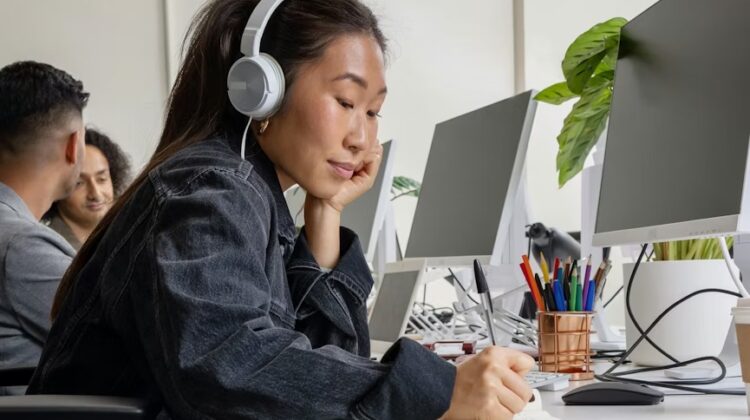
There is a specific kind of exhaustion that comes from sitting at a desk all day that I do not think gets talked about honestly enough.

It is not the exhaustion of someone who has worked hard physically — the satisfying heaviness in the muscles of a person who has used their body and earned their rest. It is something stranger and more uncomfortable than that. It is the exhaustion of someone who has barely moved for eight hours. A dull, foggy tiredness that settles somewhere behind the eyes and in the lower back. A feeling of being simultaneously drained and restless that does not make logical sense until you understand what prolonged sitting actually does to the human body.
Most of us who work office jobs know this feeling intimately. We just rarely name it for what it is.
Here is what it actually is: your body was not designed for this. Not remotely. The human body evolved over hundreds of thousands of years for near-constant movement — walking, carrying, crouching, climbing, building. The capacity to sit motionless in a chair staring at a glowing rectangle for forty or fifty hours a week is not something our biology prepared for. And the gap between what our bodies evolved to do and what modern white collar work actually requires us to do is producing a genuine and serious health problem that gets buried under productivity culture and the general normalisation of feeling vaguely terrible.
The good news — and there is genuinely good news here — is that you do not need to quit your job, wake up at five in the morning, or transform into someone who goes to the gym twice a day to meaningfully address this. The research on what it actually takes to counteract the health effects of desk work is more accessible and more encouraging than most people realise. Small, consistent changes beat dramatic unsustainable overhauls every single time.
This article is about those changes. The real ones. The ones that actually work for people who have full-time jobs, real schedules, and limited patience for advice that assumes they have three spare hours a day.
First, Let’s Be Honest About What Sitting Is Actually Doing to You
I want to spend a few minutes on this before getting to the practical advice, because I think understanding the why makes you significantly more likely to follow through on the what. Knowing that sitting is “bad for you” in a vague, general sense is very different from understanding the specific mechanisms involved — and the specific mechanisms are genuinely alarming enough to motivate action.
The cardiovascular system slows down almost immediately. When you sit for extended periods, blood flow in the legs decreases significantly. The large muscles of the lower body — which play a major role in regulating blood sugar and blood fats when they are active — become essentially idle. Levels of lipoprotein lipase, an enzyme critical for metabolizing fat in the bloodstream, drop dramatically within hours of inactivity. The result is that fats that would otherwise be processed accumulate in the bloodstream instead.
The epidemiological data on this is stark. Research published in the Annals of Internal Medicine found that people who sit for long uninterrupted periods have significantly higher rates of cardiovascular disease, type 2 diabetes, cancer, and all-cause mortality — even after controlling for their exercise habits outside of work. That last part matters enormously: the health risks of prolonged sitting are not fully offset by exercising before or after work. What happens during the hours of inactivity itself is independently damaging.
Posture and musculoskeletal health deteriorate in ways that are cumulative and slow to reverse. Most office workers develop a characteristic pattern of tightness and weakness: tight hip flexors from sustained hip flexion while seated, weak glutes from being switched off for hours at a time, tight chest and anterior shoulder muscles from hunching toward a screen, weak deep cervical flexors from the forward head position that screens encourage. This pattern does not cause obvious pain immediately — it develops quietly over months and years until the accumulated dysfunction produces the chronic lower back pain, neck tension, and shoulder problems that are essentially epidemic among office workers.
The mental health effects are real and underappreciated. Physical movement is not just exercise for the body — it is a regulatory mechanism for the brain. Movement triggers the release of BDNF, serotonin, dopamine, and endorphins. It regulates the stress response and reduces cortisol. When you remove sustained movement from your daily life, you remove a major mechanism by which your nervous system maintains equilibrium. The correlation between sedentary work and elevated rates of depression, anxiety, and chronic stress is not coincidental.
Understanding all of this is not meant to be frightening. It is meant to make the strategies that follow feel less like optional wellness tips and more like what they actually are: necessary maintenance for a body being asked to operate in conditions it was not designed for.
The Most Important Thing Nobody Tells You
Before getting into specific strategies, there is one insight from the research that I think is more valuable than any individual tip, and it changes the frame for everything else.
The problem with desk work is not simply that you are not exercising enough. It is that you are not moving enough — and those are different problems with different solutions.
An hour at the gym before work is genuinely valuable. But if it is followed by eight unbroken hours of sitting, the research suggests your body spends most of that eight hours in a metabolic state that is almost indistinguishable from the body of someone who did not exercise at all that morning. The protective effect of that morning workout diminishes the longer you sit afterward without interruption.
What matters, according to the research, is not just the total amount of movement in a day but the frequency of movement throughout the day — the degree to which long unbroken periods of inactivity are interrupted by regular, brief bouts of activity.
This is actually good news, because it means that the solution does not require you to find large blocks of time in an already crowded schedule. It requires you to change the texture of your workday — to add small movements, regularly, consistently, throughout the hours you are at your desk. That is a fundamentally more achievable challenge than finding an extra hour of exercise time every day.
Practical Strategies That Actually Work
Break Up Your Sitting — Non-Negotiably
This is the single most evidence-backed intervention for the health of desk workers and the one that costs absolutely nothing to implement. Set a reminder — on your phone, your computer, a watch, whatever works for you — to stand up and move every hour without exception.
The movement does not need to be vigorous or prolonged. Stand and do a few shoulder rolls. Walk to get a glass of water. Walk to a colleague’s desk instead of sending an email. Take a slightly longer route to the bathroom. Do a set of calf raises while you are standing up. Two to three minutes of low-level movement every hour is enough to meaningfully interrupt the metabolic disruption that sustained sitting produces.
The psychological challenge here is not physical — it is the feeling that getting up from your desk is an interruption of work rather than a component of it. Reframing this matters. Sitting motionless for four hours straight does not make you more productive. The research on this is actually quite clear: regular movement breaks improve concentration, reduce fatigue, and enhance cognitive performance. Getting up is not taking time away from your work. It is part of doing your work well.
Standing Desks — Useful, But Not a Magic Solution
Standing desks have become fashionable in office culture over the past decade, and they are genuinely useful — with an important caveat that often gets left out of the enthusiasm around them.
Standing is better than sitting. But standing all day is not significantly better than sitting all day, and for some people — particularly those with lower back issues or who stand on hard floors — it creates its own set of problems. The goal is not to replace sitting with standing. It is to alternate between them throughout the day in a way that prevents either posture from dominating.
If a standing desk is accessible to you — whether through a workplace investment, a desk converter, or even a makeshift setup using a box or a high surface — the most effective approach is a rough alternation: sit for a while, stand for a while, move for a while, repeat. Using a standing desk this way, as a tool for variety rather than a replacement for a sitting desk, produces meaningful benefits for posture, energy levels, and the metabolic disruption associated with prolonged sitting.
If a standing desk is not accessible to you, do not be discouraged. The hourly movement breaks matter more, and they cost nothing.
The Walking Meeting
This one gets suggested a lot and dismissed almost as quickly, usually because people feel awkward proposing it or are not sure it is appropriate in their workplace context. I want to make the case for it more seriously.
A significant proportion of workplace meetings — the status update, the one-on-one check-in, the informal discussion — do not require a screen, a whiteboard, or a conference room. They require two or more people talking to each other. Walking provides an entirely adequate setting for that.
The benefits of walking meetings go beyond the physical. Research from Stanford found that walking boosted creative output significantly compared to sitting — not slightly, but by around 81% on certain creative thinking measures. The relaxed physical setting also tends to produce more candid, less guarded conversation than a formal meeting room. Some of the most productive professional conversations happen when people are moving alongside each other rather than sitting across from each other.
Suggesting a walking meeting feels awkward the first time. By the third time, most people find they prefer it.
Desk Exercises Worth Actually Doing
I want to be honest about this section, because a lot of desk exercise advice is so vague or so embarrassing to actually perform in an office that it never gets used. So let me focus on the exercises that are genuinely effective, genuinely discreet, and genuinely possible to do without your colleagues thinking you have lost your mind.
Seated leg raises. Sit upright in your chair, extend one leg until it is straight, hold for five seconds, lower it slowly, switch sides. Do ten repetitions on each side. This engages the hip flexors and quadriceps, and it looks like nothing from the outside — you can do it during a phone call without anyone knowing.
Chair squats. Stand up from your chair, lower yourself back down until you are just barely touching the seat, stand back up immediately. That counts as one repetition. Do ten of these every time you stand up from your desk. It is one of the most effective lower body exercises available and it takes less than thirty seconds.
Desk push-ups. Place your hands on the edge of your desk — not a wheeled chair, something stable — and perform push-ups against the desk at roughly a 45-degree angle. These engage the chest, shoulders, and triceps meaningfully, particularly if you focus on doing them slowly with good form. Ten of these is enough to notice.
Shoulder and chest stretches. Clasp your hands behind your back, straighten your arms, and gently lift them away from your body while opening your chest and lifting your chin. Hold for fifteen to twenty seconds. This directly counters the forward-hunched position that screen work creates and provides immediate relief for the upper back and shoulder tension that most desk workers carry constantly.
Neck decompression stretches. Slowly drop your right ear toward your right shoulder and hold for twenty seconds, feeling the stretch along the left side of the neck. Repeat on the other side. Do this several times throughout the day. The cervical spine takes an enormous amount of strain from the forward head position that desk workers adopt, and regular gentle stretching prevents the chronic accumulation of tension that eventually becomes pain.
Calf raises. Stand behind your chair, hold the back for balance, and rise up onto your toes slowly, then lower back down equally slowly. This engages the calf muscles — which play a significant role in pumping blood back up from the lower extremities toward the heart — and is extremely discreet.
None of these exercises will replace a gym session. That is not their purpose. Their purpose is to maintain circulation, prevent the postural deterioration that desk work causes, and keep the body doing something other than sitting absolutely still for hour after hour. At that purpose, performed consistently throughout the day, they are genuinely effective.
Getting to and From Work
The commute is an underused opportunity that most desk workers overlook completely.
If your commute involves any element of walking — to and from public transport, to a parking garage, between buildings — that walking is worth protecting and extending deliberately. Getting off the bus one stop earlier. Parking farther away than necessary. Taking stairs instead of elevators. These choices feel trivially small in isolation. Accumulated across five days a week, fifty weeks a year, they add up to a meaningful quantity of movement that would otherwise simply not happen.
If your commute allows for cycling, it is worth considering seriously. Cycling to work is one of the most efficient ways to integrate meaningful cardiovascular exercise into a schedule that would otherwise not have room for it — because the journey has to happen regardless, and cycling replaces travel time rather than adding to it. Research on cycle commuters consistently shows significantly better cardiovascular health outcomes than matched populations who commute passively.
Walking is equally valid and considerably more accessible. A thirty-minute walk to work is thirty minutes of moderate aerobic exercise that requires no gym membership, no equipment, no rescheduling, and no willpower once it becomes a habit — because the alternative is also getting to work, just less actively.
What You Eat and Drink at Your Desk Matters More Than You Think
Physical movement is the most important lever for the health of desk workers, but it does not exist in isolation from the other choices made during the workday — and two of those choices have an outsized effect on how you feel and function.
Hydration is chronically underestimated. Mild dehydration — the kind that is completely asymptomatic except for slightly darker urine and a vague feeling of not being quite right — has measurable negative effects on concentration, short-term memory, and mood. Most office workers spend most of their workday in a state of mild dehydration because they are busy, because coffee does not count, and because the environmental cue of thirst is easy to ignore when you are focused on a screen. Keeping a large water bottle at your desk and committing to finishing it at least twice during the workday is a simple habit with a disproportionate return on investment.
The desk lunch matters. Eating a large, refined-carbohydrate-heavy lunch at your desk — the kind that produces a significant blood sugar spike and subsequent crash — is directly responsible for the afternoon energy slump that most desk workers experience as inevitable. It is not inevitable. It is a predictable physiological response to a specific dietary pattern that can be avoided with a different dietary pattern. Lunches that combine protein, healthy fat, fiber, and moderate complex carbohydrates produce a far more stable energy curve through the afternoon. This is not exotic nutrition advice — it is basic blood sugar management that makes the difference between an afternoon of reasonable function and an afternoon of fighting to stay alert.
Building Exercise Into Life Outside the Office
All of the above is about what happens during the workday. It is important. But it does not replace the separate and also important question of exercise outside work hours — and I want to address this honestly rather than leaving it out.
The research suggesting that exercise does not fully offset the effects of prolonged sitting should not be interpreted as “exercise outside work doesn’t matter.” It absolutely matters. It just needs to coexist with the within-day movement strategies, not substitute for them.
The most sustainable exercise habits for busy working adults tend to share a few characteristics. They are convenient — close to home or work, requiring minimal equipment or travel time. They are enjoyable enough that the person does them willingly rather than forcing themselves through them. And they are scheduled in advance rather than left to the “I’ll exercise when I have time” category that never actually materialises.
A thirty-minute walk three or four evenings a week is more valuable than a perfect gym program that only actually gets done once a fortnight. A yoga class you genuinely enjoy attending beats a high-intensity training program you dread and skip. The best exercise routine is the one you will consistently do — and consistency across years matters infinitely more than intensity across weeks.
The Mental Side of Desk Work
I want to close with something that I do not see discussed enough in articles about desk job health: the psychological toll of sedentary work, and the specific way that physical movement addresses it.
Office work, particularly in its modern form, tends to be cognitively demanding in a way that is paradoxically exhausting without being satisfying. The mental energy required for sustained focus, decision-making, email management, and digital communication depletes the same neurological resources that regulate mood and stress. By the end of a long desk day, many people feel not just tired but depleted in a way that makes relaxation difficult — still wired from the cognitive demands of the day but lacking the physical tiredness that typically enables genuine rest.
Movement is one of the most effective interventions for this state. Not necessarily intense exercise — sometimes a twenty-minute walk after work is more restorative than an hour at the gym, because what the nervous system needs is not more stimulation but a different kind of stimulation. The rhythmic, low-intensity movement of walking activates the parasympathetic nervous system, reduces cortisol, and clears the mental residue of the workday in a way that sitting on a couch watching television simply does not.
Building a deliberate transition ritual between work and the rest of your life — even a short walk, even ten minutes of stretching, even a few minutes of movement that marks the shift from work mode to everything else — makes a meaningful difference to the quality of your evenings, your sleep, and consequently your energy the following day.
The Bottom Line
Staying healthy while working a desk job is not about radical transformation or perfect discipline. It is about understanding what your working conditions are doing to your body and making a series of small, deliberate, consistent choices that counteract those effects.
Stand up every hour. Do a few exercises at your desk. Propose a walking meeting. Take the stairs. Eat a lunch that doesn’t guarantee an afternoon crash. Drink more water. Move a little on the way home.
None of these things are hard. None of them require willpower reserves you do not have. What they require is the decision to take your physical health seriously enough to build it into the ordinary rhythm of your ordinary day — not as an add-on that competes with everything else, but as the foundation that makes everything else more possible.
Your body is asking for that. It has been asking for a while. The good news is that it is remarkably responsive when you start listening.
Found this useful? Share it with a colleague who spends too much time at their desk — which is probably most of them. And explore more health and lifestyle content right here on DennisMaria.
This article is for general informational purposes only and does not constitute medical advice. If you have existing health conditions or concerns about pain related to your working posture, please consult a qualified healthcare professional or physiotherapist.